

I've been making drinks at home for years, but fermented drinks are a category I came to late. Fermented pineapple tepache is a Mexican drink made from pineapple skin that's fruity, slightly tangy, and lightly fizzy, and it's a great way to reduce waste whenever you cut up a ripe pineapple.
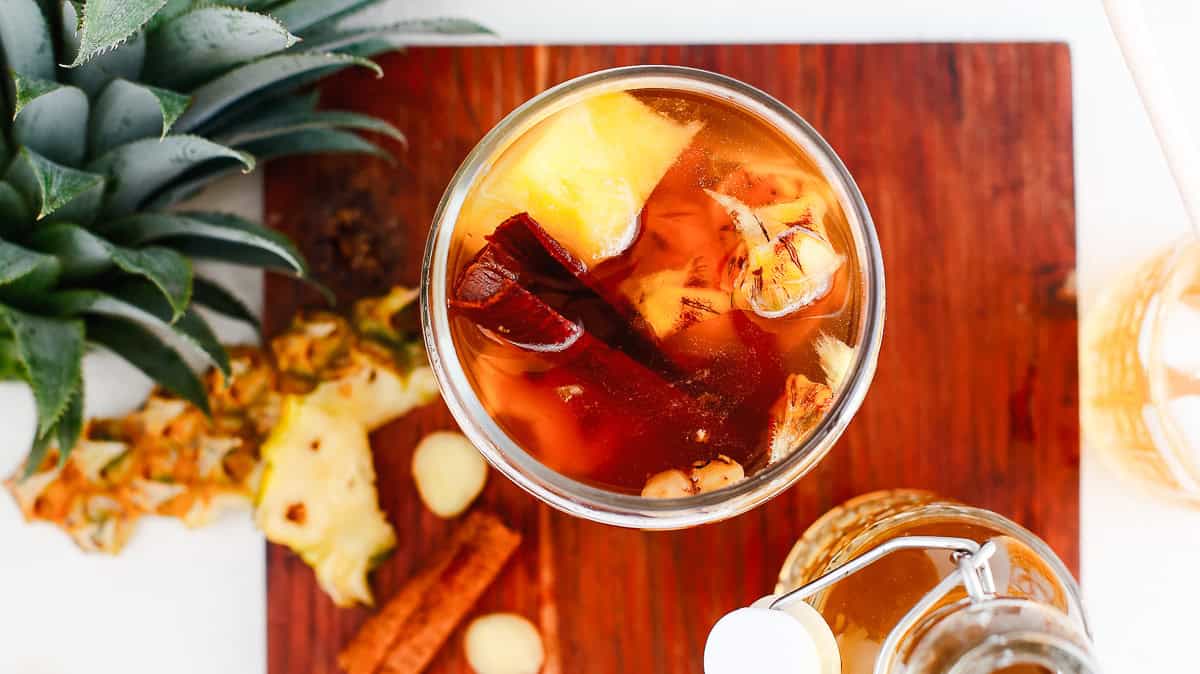
My husband, F, had been talking about tepache for weeks after trying it at a friend's house, and I kept putting it off because waiting multiple days for a drink felt ridiculous when I could just blend something and have it immediately. I'm not someone who does patience well in the kitchen. I test recipes constantly, I adjust on the fly, and I want results fast so I can move on to the next thing.
The fermentation process felt like the opposite of everything I usually do with drinks, and the closest I had come was making kombucha. But F wouldn't let it go, so one Monday I threw all the ingredients together.
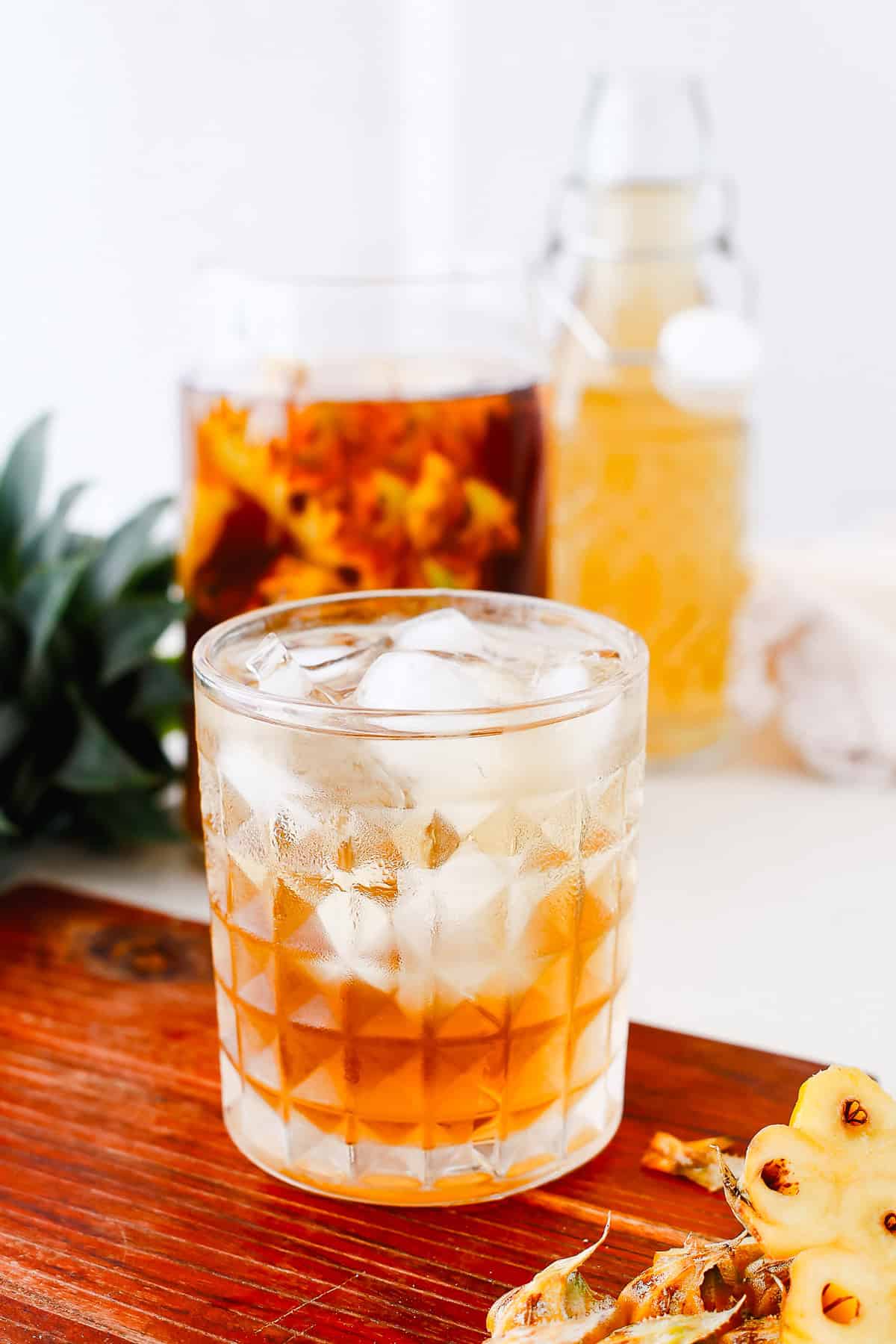
I checked it every day more out of obligation than excitement. By Wednesday, the jar was bubbling and smelling incredible in a way that made me excited too. When I finally strained and tasted it on Thursday, I finally understood the appeal. F finished his glass around the same time I did, and we loved it!
If you want to keep exploring bubbly fermented drinks, my passionfruit kombucha is the next thing to try.
What is Tepache?

Tepache is a fermented pineapple drink made from pineapple rinds, water, sugar, and spices. It is traditionally made with piloncillo, an unrefined cane sugar, but brown sugar works well if that is what you have.
It ferments at room temperature over a few days, developing a naturally bubbly, sweet-tangy flavor that's refreshing on its own or mixed into mocktails. It's a great use of pineapple peel leftover from making my Colombian fruit salad or spicy pineapple margarita mocktail.

Ingredients
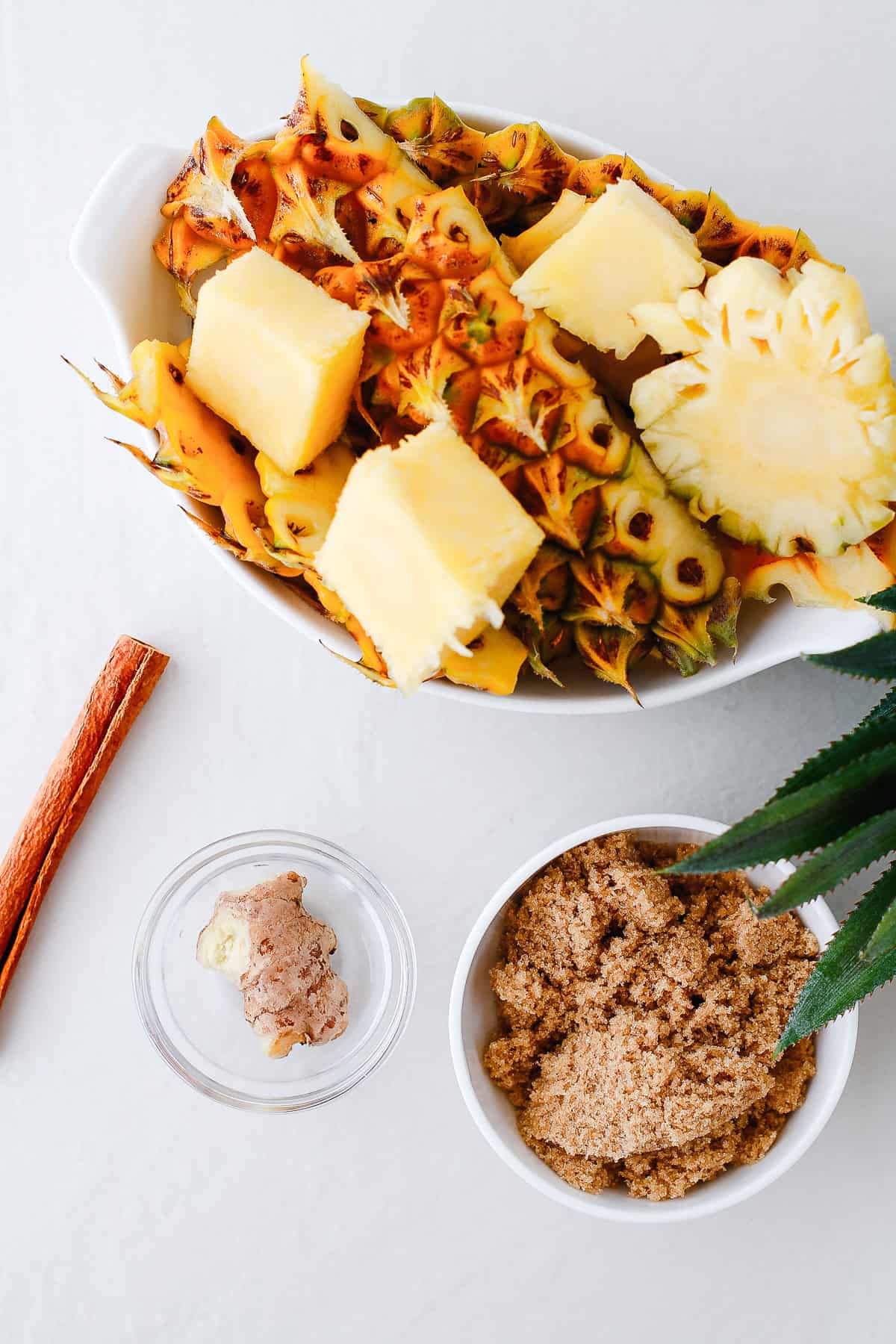
Fresh ripe pineapple is the base of this recipe, and the riper it is, the sweeter and more flavorful your tepache will be. Brown sugar feeds the fermentation and adds a deeper sweetness that pairs better with pineapple than white sugar would. If you can get pinocillo, Mexican brown cane sugar, it'll be even better.
See the recipe card for exact quantities.
Top Tips for Fermented Pineapple Tepache
Keep it out of direct sunlight: Tepache ferments best at room temperature in a shaded spot. Direct sunlight can make it ferment too quickly.
Leave room at the top of the container: The mixture can bubble as it ferments, so extra space helps prevent overflow and keeps the process cleaner.
Use ripe pineapple: Riper pineapple gives the tepache better sweetness and stronger pineapple flavor.
How to Make Pineapple Tepache?

Fermented pineapple tepache is lightly sweet, slightly tangy, and naturally fizzy as it sits. The flavor changes a little each day, which is part of what makes it fun to make at home.
Prep the pineapple
Start by preparing the pineapple scraps for the tepache.
- Slice off the peel in strips and leave a little flesh attached so the tepache has more pineapple flavor.
- Use the peels and core, but discard the crown and base.
- Avoid using pineapple that smells fermented, moldy, or off before you start.
Build the tepache base
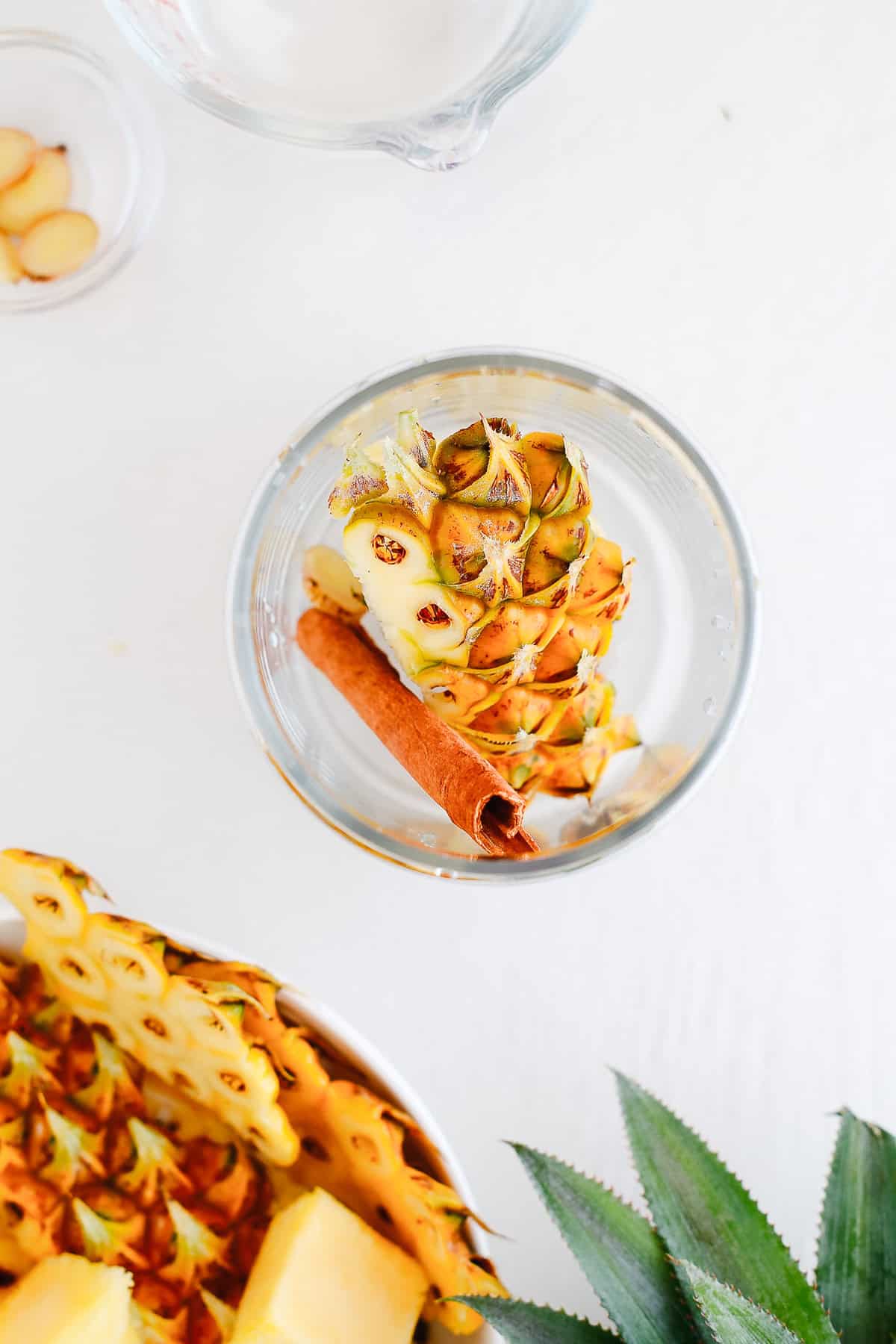
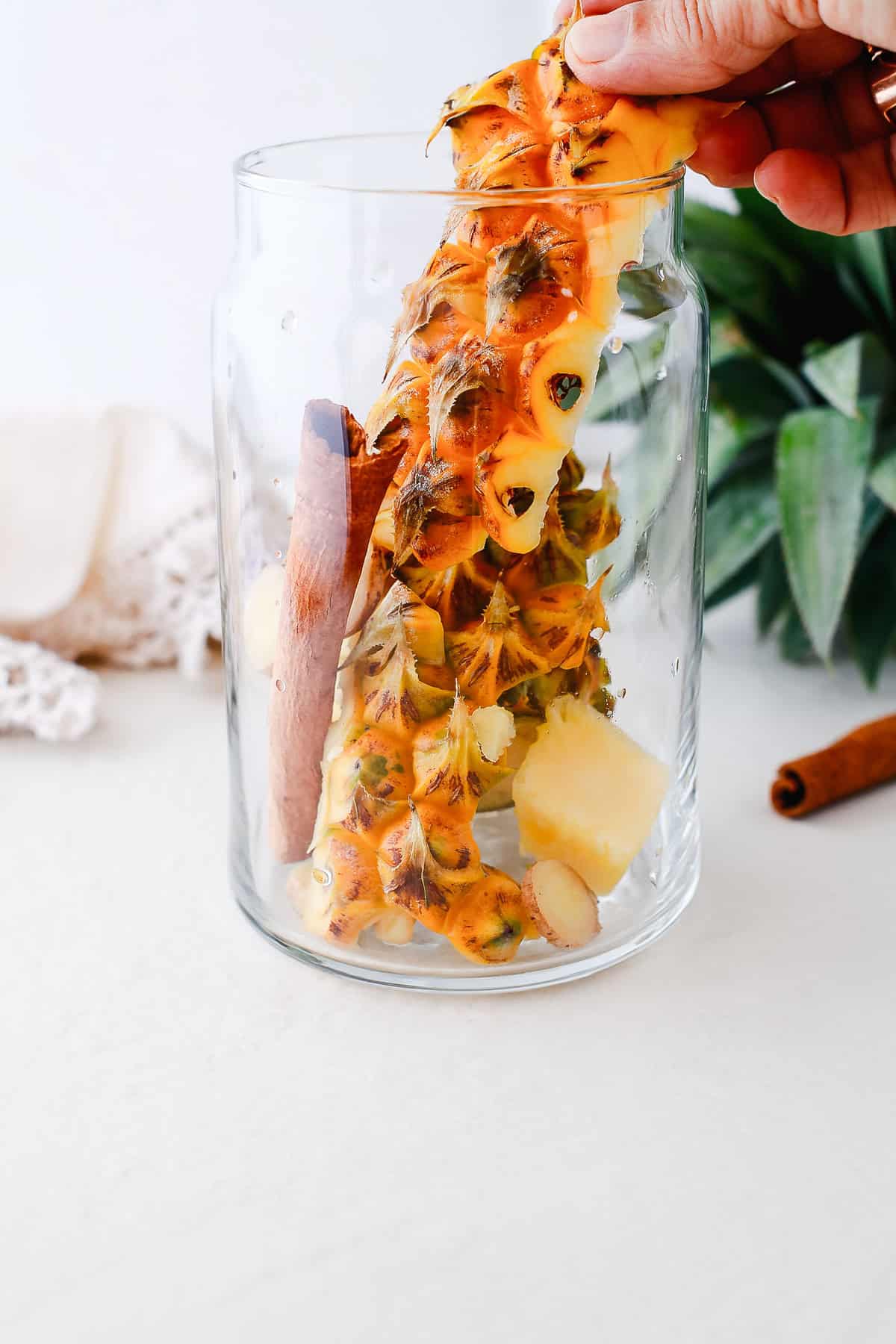
- The pineapple should be mostly covered by the liquid, but it does not need to be submerged and packed down tightly.
Ferment the tepache
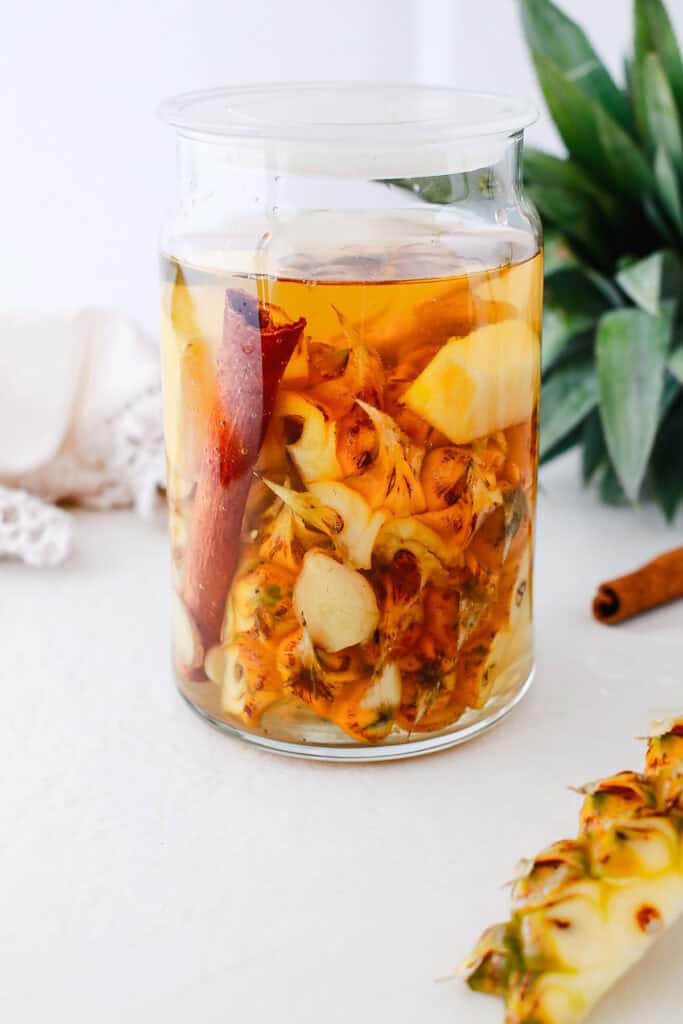
- Stir once daily and check for bubbles, a light fermented smell, and a sweeter-tangy flavor.
- Start tasting after the second day so you can stop the fermentation before it gets too sour.
- If it smells rotten, grows fuzzy mold, or looks slimy, discard it and start over.
Strain and refrigerate

Serve cold and enjoy!
Tepache is ready when it smells fruity and slightly tangy with small bubbles forming on top or along the sides. Start tasting after the second day since warmer rooms speed things up.
Low fizz means fermentation needs more time or your room is too cold. Let it sit another day or two at room temperature and make sure the container is only loosely covered, not sealed tight.
It fermented too long. Tepache gets tangier each day, especially in warm kitchens, so taste it daily to catch it before it turns sharp.
You can, but using mostly peels and cores keeps it lighter and more traditional. Too much flesh makes it thicker and sweeter than it should be.
Best within 5 to 7 days. The flavor keeps changing slowly in the fridge, becoming more fermented and less sweet over time.
Your tepache has gone bad if it smells rotten, looks slimy, or has fuzzy mold on the surface. Lightly sour and tangy smell is normal, but anything putrid or musty means toss it and start again.

Fermented Pineapple Tepache Recipe
Ingredients
- 1 pineapple
- 1 cup brown sugar or Pinocillo: https://amzn.to/4wIMLrd
- 7-8 cups water
- 1 cinnamon stick
- 1 inch ginger sliced
Instructions
- Rinse the pineapple with cool tap water to remove pests or dirt. Cut off the crown and base of the pineapple.
- Slice it into vertical strips, leaving about ½" of the pineapple flesh on the peel.
- Place the pineapple peels and cores into a clean wide-mouth jar. Add the cinnamon stick and sliced ginger.
- Dissolve the sugar in water and pour it over the pineapple scraps, leaving at least 1" headspace in the jar. Stir with a wooden spoon to dissolve the sugar.
- Cover the jar and let it ferment for 2 to 5 days at room temperature. Stir daily with a wooden spoon.
- Strain the tepache through a cheesecloth and transfer to a bottle and store it in the fridge.

Lisa Brown says
I cant wait to try this one! Thank you.
Ksenia Prints says
So glad!