
One of the most versatile and deliciously sweet ingredients in mocktails and cocktails, this easy simple syrup recipe is wonderful on its own and can be easily infused in so many ways.
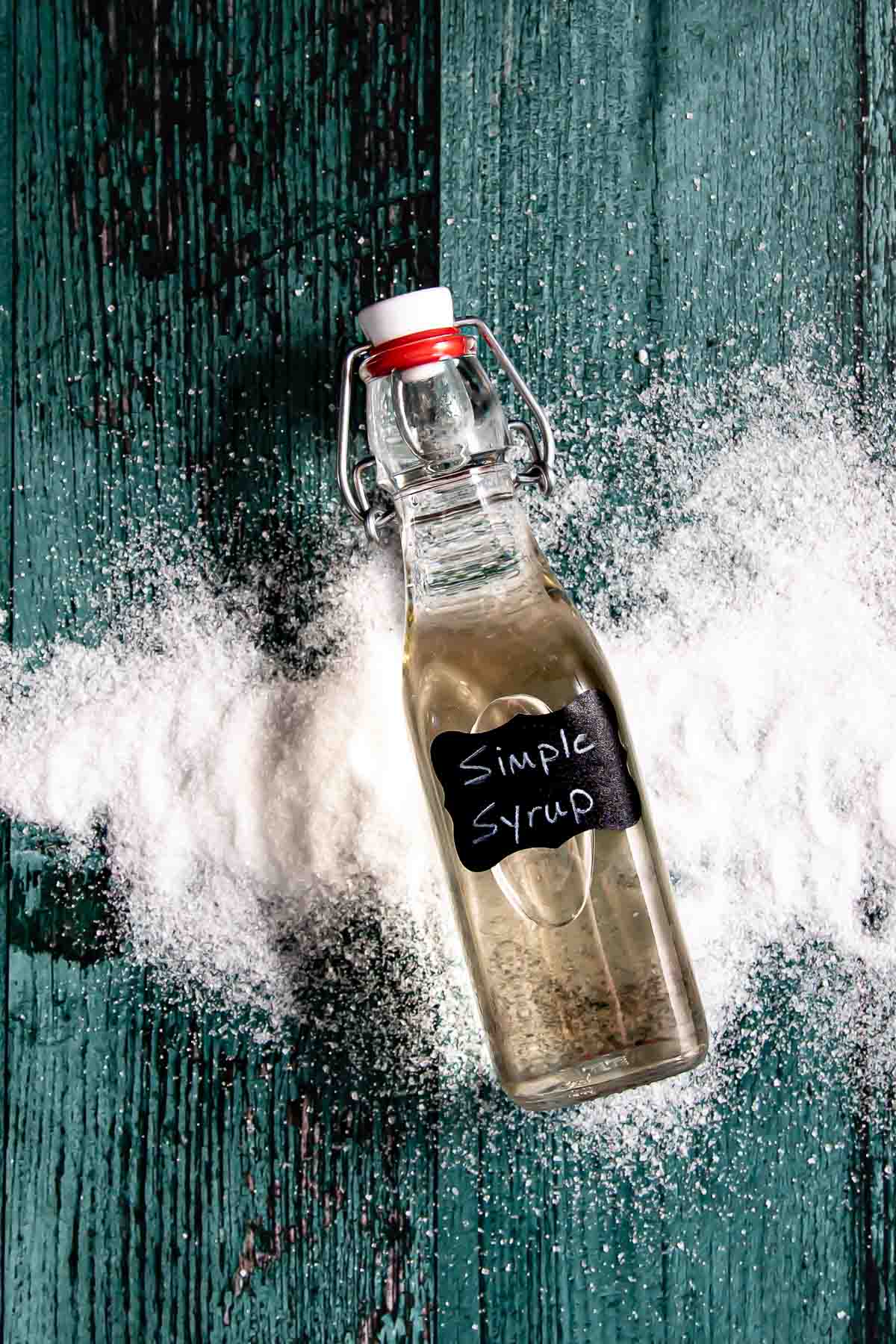
- Ingredients For An Easy Simple Syrup
- Simple Syrup Ratios: 1:1 vs. 2:1 Rich Syrup
- My Favorite Tools To Use
- How To Make Simple Syrup
- How To Make Rich Simple Syrup
- Other Ways To Prepare Simple Syrup
- How To Store Simple Syrup
- How to Infuse Simple Syrup: 4 Easy Methods
- Expert Tips To Make The Best Simple Syrup
- FAQ
If you regularly make mocktails or cocktails at home, then I'm sure you've needed simple syrup. While you can buy a bottle for a reasonable price, homemade simple syrup is nearly free in cost and free of preservatives. You can also have control over how much is made, so there isn't any waste.
If you've ordered a drink from your favorite coffee place, then you have enjoyed a simple syrup in some form in your hot or iced coffee. You can use a simple syrup of different flavors in your iced tea, homemade lemonades, club soda, or soda water.
Besides just classic sugar and water, you can also make infused simple syrups by following most of the same steps. Some of my favorites include my lavender simple syrup, chai syrup, and blackberry simple syrup.
- Homemade Hazelnut Syrup Recipe
- Starbucks Copycat Brown Sugar Apple Crisp Syrup Recipe
- Homemade Pecan Syrup and Sweet Toasted Pecans Recipe
- Homemade Lavender Simple Syrup Recipe

Ingredients For An Easy Simple Syrup
All you need is water and sugar and you are good to go!
Types of Sugars You can Use:
- Cane Sugar - Cane sugar syrup is earthier, bolder, and gives a toasted sugar flavor than white sugar. Not as strong as turbinado or molasses.
- Brown Sugar - This syrup is called Demerara Syrup. Great for coffee cocktails and darker beverages.
- Palm Sugar - Golden in color with a cotton candy sweetness.
- Honey - 3:2 honey to water ratio.
- Agave Nectar- 2:1 agave to water. Curious about agave, check out my post about Simple Syrup vs. Agave!
Read more about my favorite simple syrup replacements. Spoiler alert: most of these are already in your cabinet.
Simple Syrup Ratios: 1:1 vs. 2:1 Rich Syrup
- Classic Simple Syrup: 1 part sugar - 1 part water. Use for everyday mocktails, iced coffee, iced tea, and lemonade.
- Rich Simple Syrup: 2 parts sugar - 1 part water. For craft cocktails/mocktails, bar-style drinks, tiki sips.
- Light Simple Syrup: 1 part sugar - 2 parts water. For lightly sweetened herbal teas & spritzers.
My Favorite Tools To Use



How To Make Simple Syrup
- In a small saucepan, add one part water and one cup sugar over medium heat. Stir to mix and dissolve the sugar.
- Bring the mixture to a boil, stirring occasionally.
- Remove the pan from the heat and let it sit to cool to room temperature.
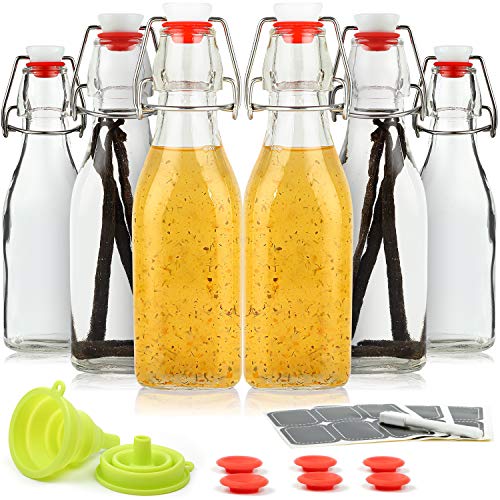
- Once cooled, pour into your airtight container using a funnel.


How To Make Rich Simple Syrup
Rich simple syrup is only slightly different from regular simple syrup in terms of the sugar-to-water ratio. The ratio is 2 parts sugar to 1 part sugar, creating a richer and sweeter simple syrup. When creating rich syrup, the cooking process is the same. This creates a sweeter, thicker syrup to add more sweetness to a drink easily.
Other Ways To Prepare Simple Syrup
- Traditional Stovetop Method (Cooked): This is the classic method where sugar and water are combined in a saucepan and heated on the stovetop until the sugar completely dissolves. It's then cooled before use. This method is quick and effective for both regular and rich simple syrups.
- Cold or Room Temperature Method (Uncooked): For a quick and easy version, especially if you're making a small amount, you can mix equal parts sugar and water at room temperature. Stir well until the sugar dissolves. This method is suitable for making regular simple syrup without applying heat.
- Mason Jar/Shaking Method (Uncooked): Combine sugar and water in a sealed mason jar and shake vigorously until the sugar dissolves. This method is particularly useful for making small amounts of simple syrup quickly without the need for heat.
- Blender Method (Uncooked): Combine sugar and water in a blender and blend until the sugar completely dissolves. This method is quick and efficient for making larger batches of simple syrup without heat.
- Hot Water Dissolving Method (Partially Cooked): Dissolve sugar in hot water (not boiling) by stirring until the sugar is completely dissolved. This method is quicker than stovetop cooking but still involves heat to aid in dissolving the sugar.

How To Store Simple Syrup
How long will simple syrup last in the fridge? Store your simple syrup in a clean, airtight container in the refrigerator. It can typically last for up to one month. Check for any signs of spoilage, such as cloudiness or off-putting odors. For a more in-depth look at syrup storage check out my post on how long does simple syrup last.
Can I freeze simple syrup? If you've made a large batch, consider freezing in ice cube trays for convenient portions. Thaw as needed. Frozen syrup can last for several months without losing quality.
Top Tip!: Label your bottles: Clearly label your simple syrup container with the flavor variation and the date of preparation. This helps you keep track of its freshness and flavor profile.
How to Infuse Simple Syrup: 4 Easy Methods
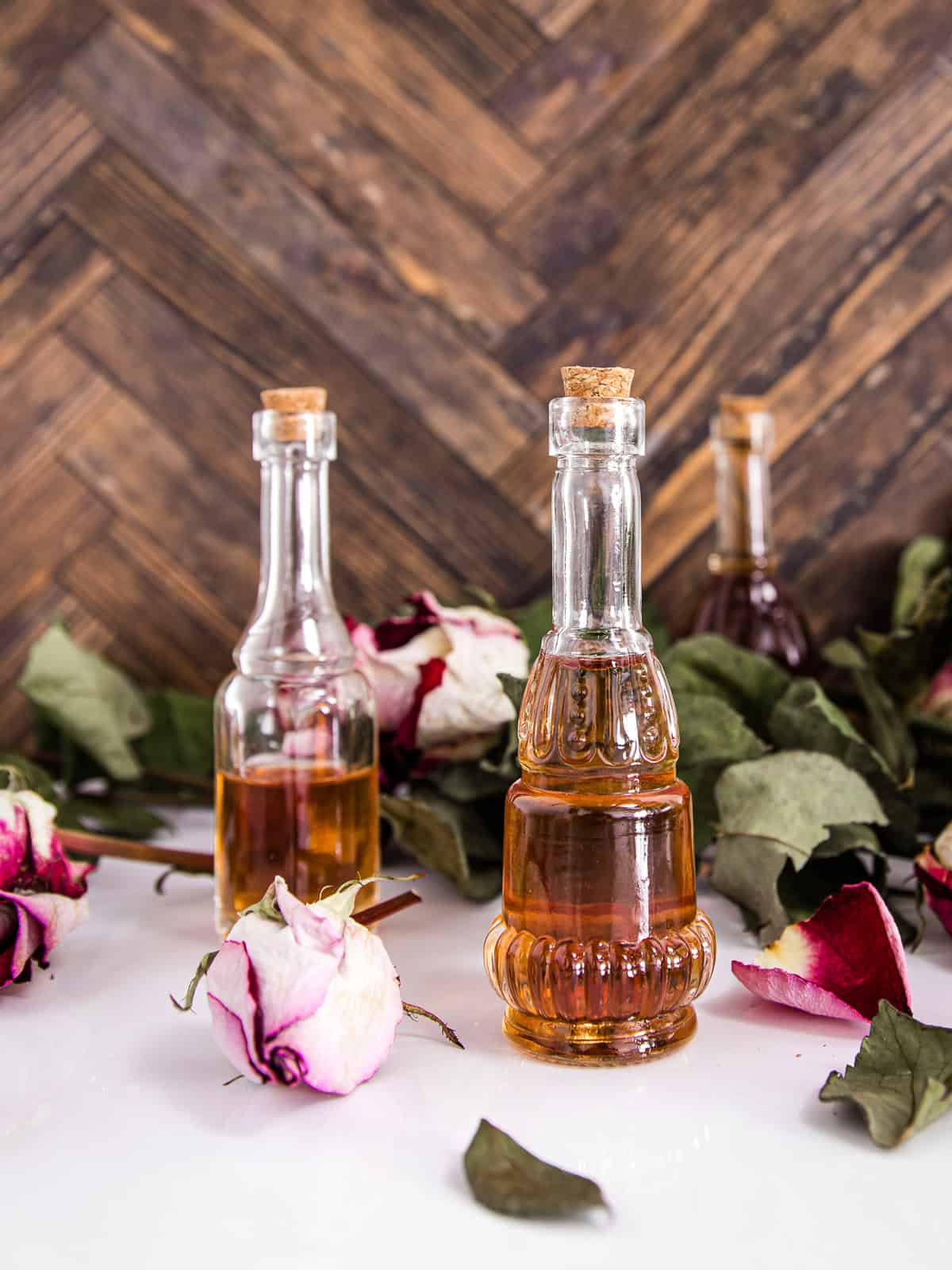
Simple syrup is a blank canvas. Once you master the basic 1:1 ratio, you can infuse herbs, spices, citrus, or fruit using one of these four techniques:
- Warm Infusion (Best for Dried Spices & Herbs): Add whole spices or fresh herbs during the warm simmering stage, then let them steep as the syrup cools to room temperature before straining. Try it in: Homemade Chai Syrup Recipe or our Fall-Perfect Pumpkin Spice Syrup.
- Gentle Floral Infusion (Best for Delicate Botanicals): Remove the syrup from heat first, then submerge fresh or dried flowers so heat doesn't scorch the delicate aromatics. Try it in: Easy Lavender Simple Syrup.
- Fruit Puree & Simmer (Best for Berries & Stone Fruit): Simmer fresh or frozen fruit directly with the sugar and water, gently mashing the fruit to release juices before straining through fine mesh. Try it in: Simple Blackberry Syrup or Watermelon Simple Syrup.
- Citrus Zest Steep (Best for Bright Citrus Oils): Add fresh orange, lemon, or lime peel (white pith removed) to the warm syrup to extract pure essential citrus oils without bitter acidity. Try it in: Easy Orange Simple Syrup Recipe.
Expert Tips To Make The Best Simple Syrup
Correct Ratios: For regular simple syrup, the classic ratio is 1:1 (equal parts sugar and water). For rich, simple syrup, experiment with higher sugar concentrations, such as 2:1 or 3:1. Finding the right ratio is crucial for reaching the desired sweetness without making the syrup overly thick (more details above).
Gentle Heat: When cooking the syrup on the stovetop, use low heat to medium heat. Avoid boiling the mixture vigorously, as this can lead to caramelization and alter the flavor.
Cool Before Storing: Allow the syrup to cool completely before storing it in your chosen container. Sugar burns are some of the worst out there, and that's the last thing you need.
Strain For Clarity: Strain the syrup after infusing it to remove any solid particles or impurities. Use a fine mesh strainer, one you would use for a mocktail recipe or sifting flour.
Experiment with Sweeteners: Don't limit yourself to white sugar. Experiment with different sweeteners like brown sugar, cane sugar, honey, or agave nectar to add depth and unique flavors to your syrup.
FAQ
When stored in a clean, airtight container in the fridge, simple syrup usually lasts up to one month. For longer storage, freeze it in ice cube trays and thaw portions as needed. Always check for cloudiness or off smells before use to ensure freshness.
Cloudiness usually indicates crystallization or early bacterial growth. If your syrup becomes cloudy right after cooking, you likely boiled it too hard or didn't fully dissolve the sugar granules. If it turns cloudy after weeks in the fridge, it has gone bad and should be discarded.
Crystallization happens when sugar molecules re-bind together. To prevent this, add a tiny pinch of salt or ½ teaspoon of lemon juice or corn syrup to the pan while heating. This breaks down sucrose into glucose and fructose, preventing crystals from forming.
Definitely! Honey and agave bring their own unique flavors and require different ratios - 3 parts honey to 2 parts water, and 2 parts agave to 1 part water. These alternatives add depth and complexity, perfect for elevating your homemade syrups.
Use gentle heat to dissolve sugar fully without boiling vigorously - this prevents crystallization. Always cool syrup completely before storing it in sanitized, airtight glass

If you made this recipe, I would be so grateful if you would give it a ⭐ rating and leave a review in the comments! I'd love to see your drink in action as well! Post it on Instagram with the ️#MocktailForest and tag me @MocktailForest!

Easy Simple Syrup Recipe
Equipment
Ingredients
- 1 cup White granulated sugar
- 1 cup Water
Instructions
- In a saucepan, add the water and sugar. Using a rubber spatula, stir to mix and dissolve the sugar.
- Bring the mixture to a boil, stirring occasionally.
- Remove the pan from the heat and let it sit to cool to room temperature.
- Once cooled, pour into your airtight container using a funnel.
Expert Notes
- Correct Ratios: For regular simple syrup, the classic ratio is 1:1 (equal parts sugar and water). For rich, simple syrup, experiment with higher sugar concentrations, such as 2:1 or 3:1. Finding the right ratio is crucial for reaching the desired sweetness without making the syrup overly thick.
- Gentle Heat: When cooking the syrup on the stovetop, use low heat to medium heat. Avoid boiling the mixture vigorously, as this can lead to caramelization and alter the flavor.
- Cool Before Storing: Allow the syrup to cool completely before storing it in your chosen container. Sugar burns are some of the worst out there, and that's the last thing you need.
- Strain For Clarity: Strain the syrup after infusing it to remove any solid particles or impurities. Use a fine mesh strainer, one you would use for a mocktail recipe or sifting flour.
- Storing: Store the syrup in a clean, airtight container in the refrigerator. Consider using a glass container to maintain freshness and prevent any plastic-related flavors.
- Experiment with Sweeteners: Don't limit yourself to white sugar. Experiment with different sweeteners like brown sugar, cane sugar, honey, or agave nectar to add depth and unique flavors to your syrup.


Comments
No Comments