
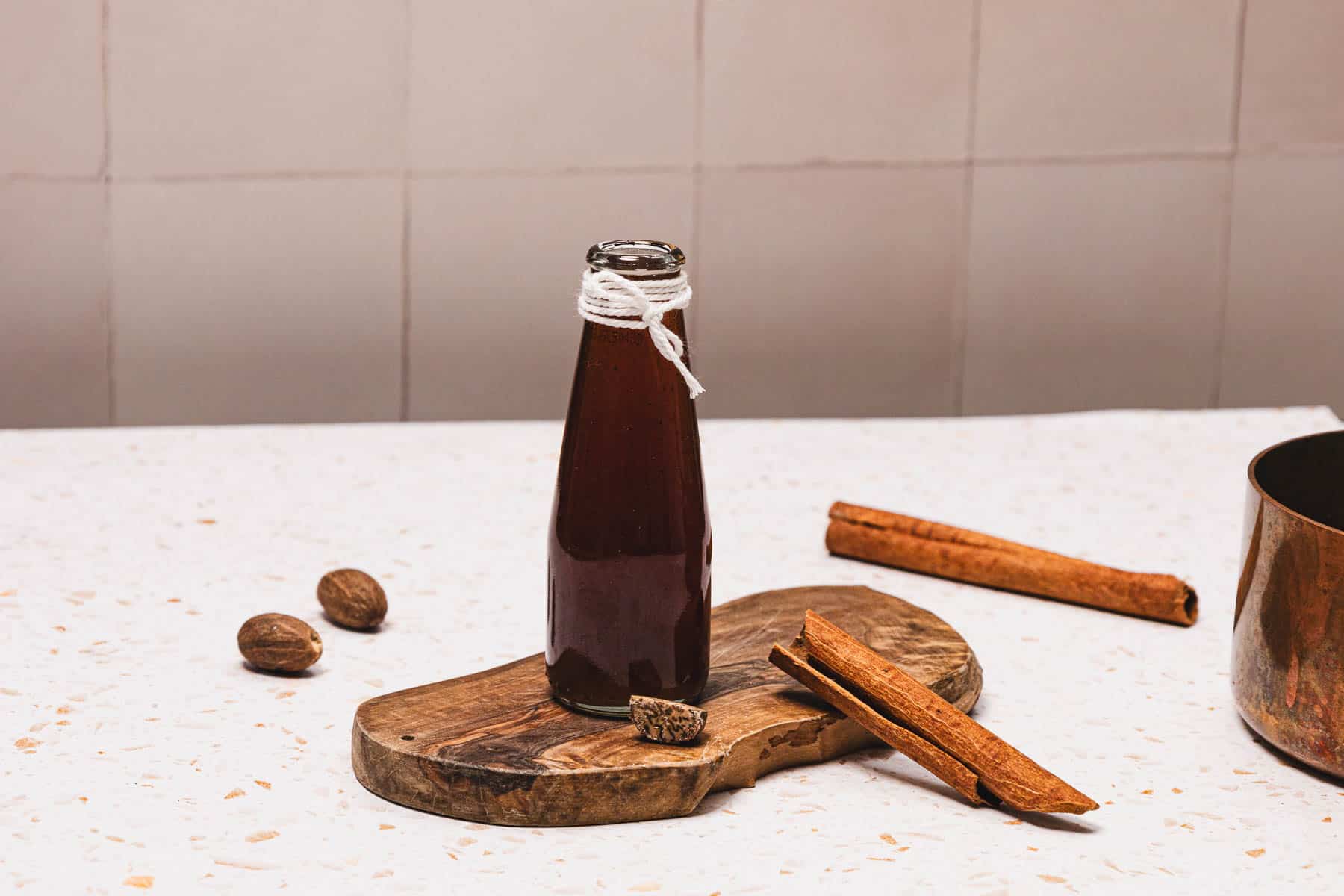
A jar of syrup is the least glamorous thing in my fridge and it does more work than anything else in there. Two ingredients, ten minutes on the stove, and every drink I make for the rest of the week has somewhere to go.
That matters more when you are not drinking. A cocktail gets its backbone from the spirit. Gin carries juniper, whiskey carries smoke and oak, and the bartender is mostly deciding how to arrange what is already in the bottle. Take the alcohol out and all of that vanishes at once. What you are left with is juice, fizz, and ice, which is pleasant and also a little thin. Syrup is what fills that space.
So while the rest of the internet is rediscovering homemade syrups as a money-saving trick, I want to make a slightly different case. For anyone building drinks without alcohol, syrup is not a nice extra. It is the flavor engine. Everything I keep in my syrups archive exists because of that.
Copying the Cafe at Home
For a long time the good flavors lived behind the counter. If you wanted brown sugar or toasted vanilla in your drink, you paid someone in an apron for it, and the bottle it came from had a label you could not buy.
That has quietly stopped being true. Coffee has gotten expensive enough that people started doing the math on their daily order, and the math is not subtle. A drink that costs several dollars across the counter costs cents to put together at home once you have the syrup made. Multiply that by five mornings a week and the number gets your attention.
What surprised me is how quickly saving money turned into something else. People started with a copycat recipe to cut costs and then kept going because it was fun. My Starbucks copycat iced cinnamon dolce latte is one of the most visited things on this site, and I do not think that is only about the price.
What Social Media Did to Syrup
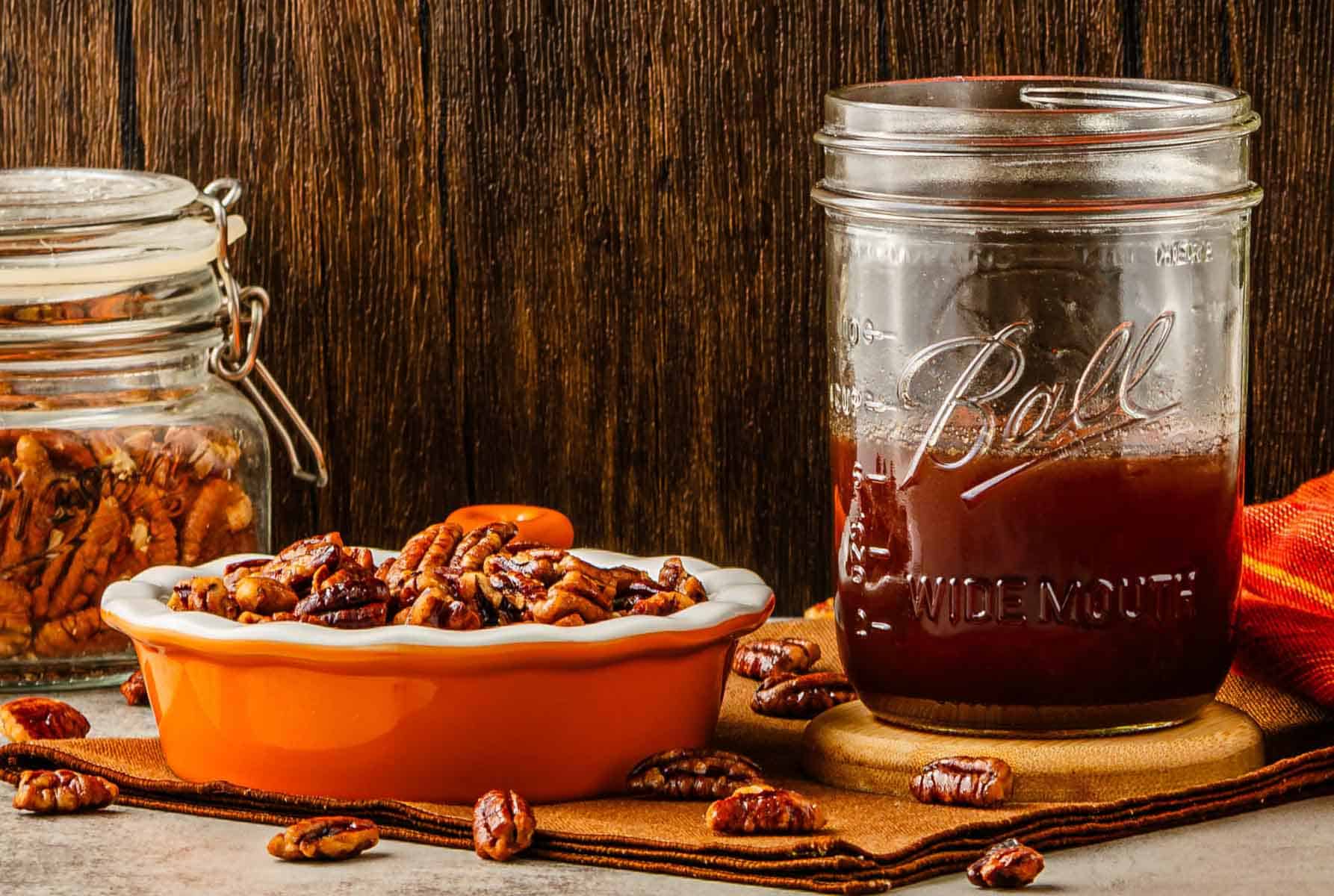
Syrup was always easy. What changed is that people started filming it.
A pot of sugar and water infusing with mint or Earl Grey turns out to be very watchable. The sugar dissolves, the color shifts, and someone pours the finished thing into a pretty bottle. The whole process runs under a minute of video, which means the barrier to trying it collapsed almost overnight. You do not need a recipe when you have watched forty people do the same three steps.
The results got stranger and better as more people joined in. Cherry blossom syrup. Syrup made from the fruit clinging to a mango pit that would otherwise go in the bin. Chili syrup for people who want their drink to bite back. None of that would have spread through cookbooks. It spread because it looked good in fifteen seconds.
The Kitchen Became Somewhere People Gather
There is a slightly bigger thing happening underneath the syrup trend. Coffee shops used to be the place you went that was neither home nor work, and during the pandemic that place disappeared. People rebuilt it in their own kitchens instead, and then never really went back.
I watch this play out in my own house. Someone comes over, and instead of going out we end up standing at the counter making drinks and talking about nothing for an hour. The drink is an excuse. It is a good excuse.
Once your kitchen becomes that spot, you start caring about the details in it. Better beans, a decent grinder, a shelf where things live. Syrup slots into that naturally, because it is the cheapest way to make a home drink taste deliberate rather than improvised. If you are setting a corner up, my coffee bar ideas post covers what actually earns its counter space.
You Decide What Goes In
Read the label on a bottled syrup sometime. Most of them run on high-fructose corn syrup and preservatives, because they have to sit in a warehouse and then a cafe for months without changing.
Yours does not. It sits in your fridge for a couple of weeks and then it is gone. That means you can sweeten with honey, maple, agave, or plain sugar depending on what the drink needs. It means you can make a half batch because you only want it once. It means you can dial the sweetness down, which is the single most common thing people want and the one thing a sealed bottle will never let you do.
It also opens up flavors that would never survive a supply chain. Rosemary and grapefruit. Cardamom and pistachio. My chai syrup started as an attempt to stop buying chai concentrate and turned into something I now prefer, mostly because I got to decide how much ginger went in.
One Jar, Many Drinks
The part that keeps me making them is how far a single batch travels.
A jar of blackberry syrup goes into a soda in the afternoon, over yogurt the next morning, and into a mocktail when someone comes over on the weekend. Same jar, three completely different drinks, no extra work after the first ten minutes.
Syrup is also what makes half the trends on this site possible. Dirty sodas are essentially soda, cream, and syrup, and the syrup is the only part doing anything interesting. My lavender margarita mocktail is lime and lavender syrup with a good rim, and without the syrup it is just limeade. Even a pumpkin spice syrup covers an entire season of lattes, cold brews, and shaken drinks out of one pot.
Once you start thinking this way, the shopping list gets shorter rather than longer. You stop buying six flavored things and start making two syrups that cover all of it.
Keep a Jar in the Fridge
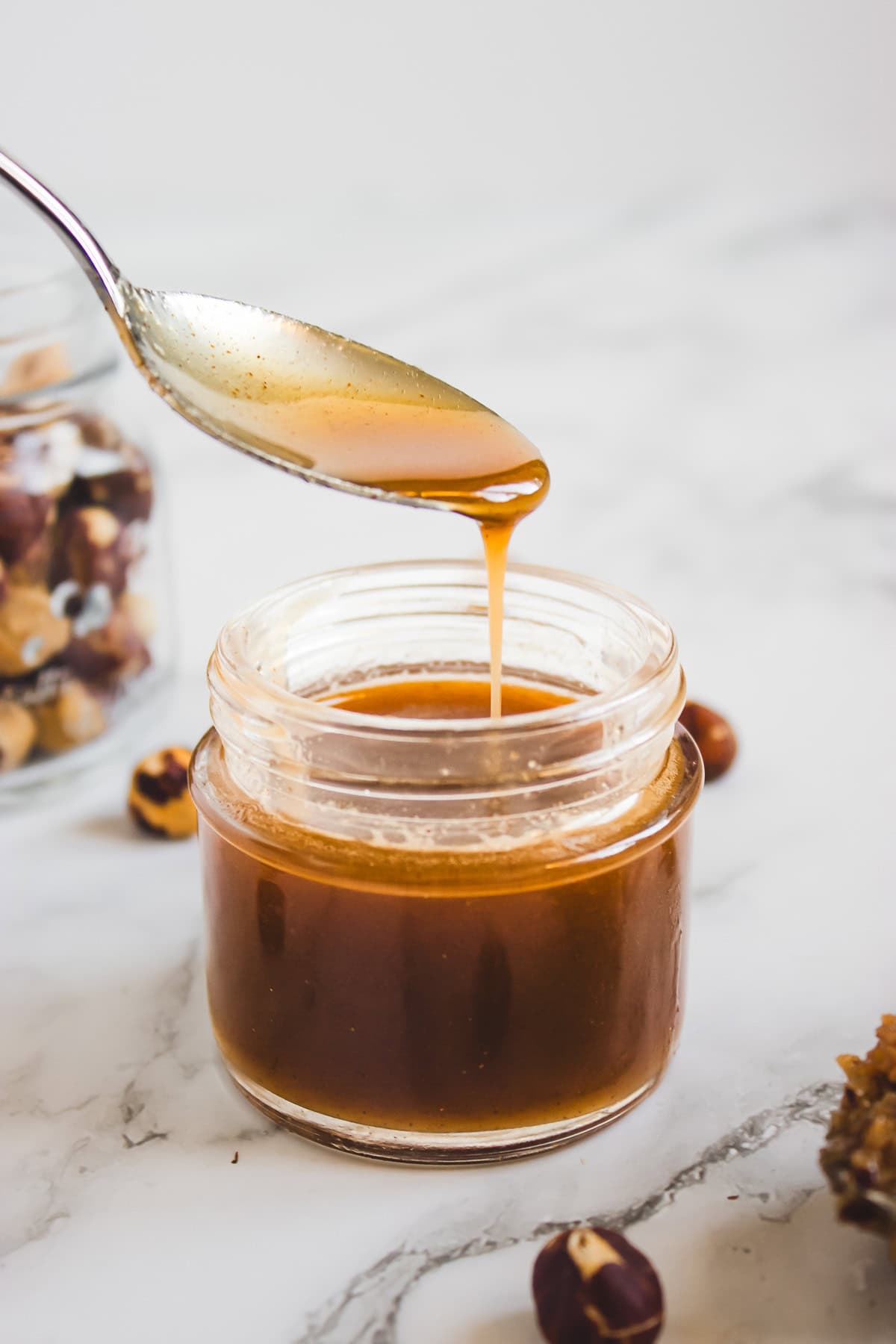
Homemade syrup started spreading as a way to spend less, and that part is real. But it has turned into something people do because they like doing it, which is usually how a habit survives past the first month.
If you are drinking alcohol-free, I would put it near the top of the list of things worth learning. Not because it is difficult, since it is sugar and water and about ten minutes of attention. Because it is the difference between a glass of juice with bubbles in it and a drink somebody actually made on purpose.
Pick one flavor you like. Make it Sunday. See how many things it ends up in by Thursday.

Comments
No Comments